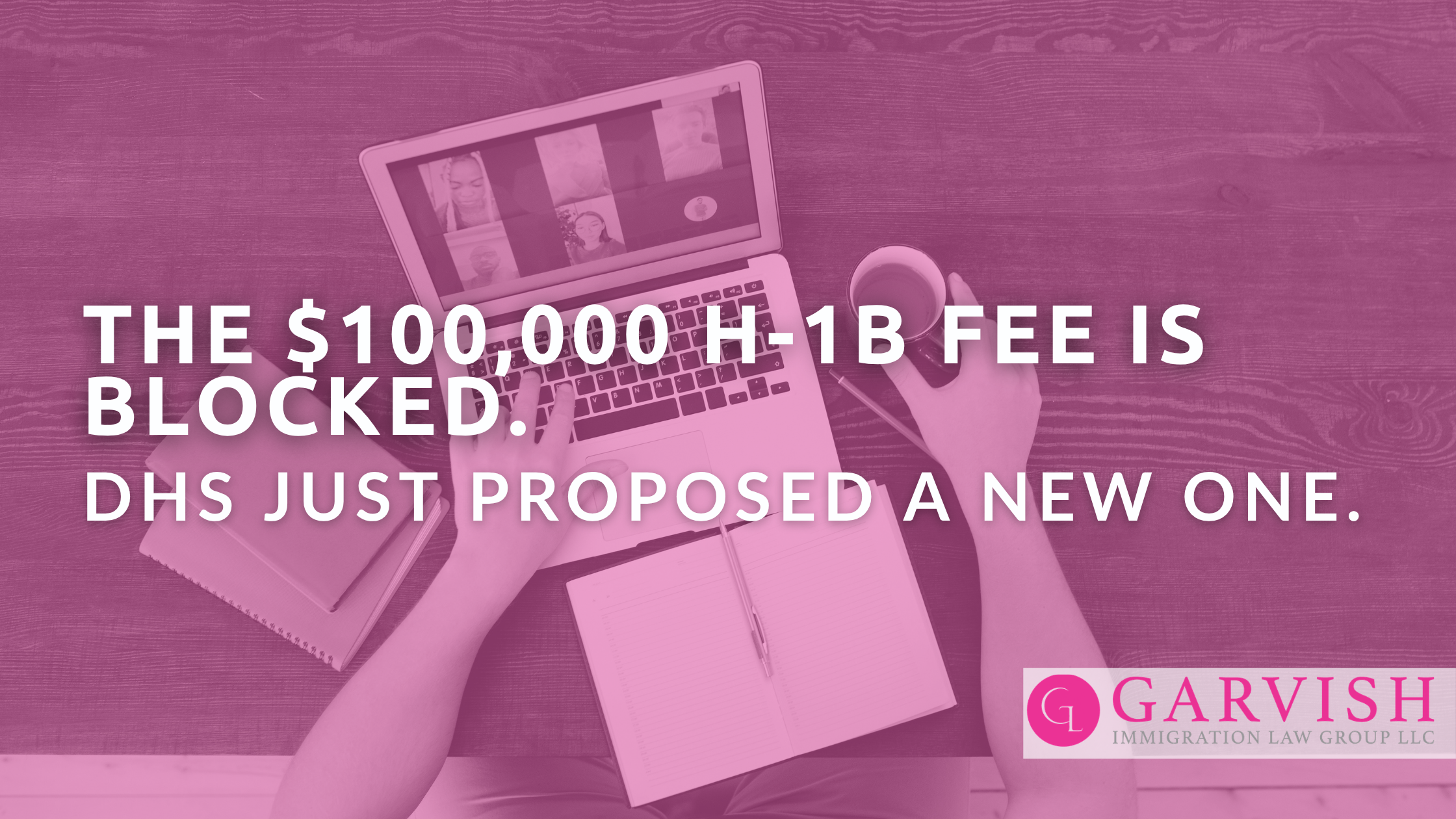

It has been a confusing few months for employers who rely on the H-1B visa program. Since the Trump administration announced a $100,000 supplemental fee on new H-1B petitions back in September 2025, many businesses have been left wondering whether to pause hiring plans, absorb the cost, or simply wait and see what happens next. For a lot of employers, especially in healthcare and education, the fee made sponsoring foreign workers feel completely out of reach.
For a brief moment, things looked like they were turning around. Then they got complicated again.
What the Fee Was
In September 2025, President Trump signed a proclamation requiring employers to pay an additional $100,000 on top of standard filing fees for every new H-1B beneficiary. The administration framed it as a way to protect American workers and prioritize higher-skilled foreign employees.
The impact was immediate. Many employers, particularly hospitals, universities, and smaller businesses, found the cost prohibitive. H-1B filings dropped significantly. Healthcare and education employers, who rely heavily on H-1B workers and were not even addressed in the administration’s rationale for the fee, were left without guidance or relief.
What the Court Decided on June 8
The U.S. District Court in Massachusetts ruled in favor of twenty states led by California, striking down the fee on every count. The ruling was sweeping and the court did not leave room for doubt.
The core finding was this: the $100,000 payment is a tax, not a regulatory fee. And only Congress has the power to create a tax. The President cannot impose one through a proclamation. The court found no legal basis for the fee and vacated the entire policy nationwide.
The court also found that the agencies implementing the fee:
- Skipped the required public notice and comment process
- Acted beyond their legal authority
- Failed to provide any reasoned explanation for the fee amount or its impact on employers outside the IT and STEM sectors
- Ignored the reliance interests of employers who had built staffing plans around the existing fee structure
What Happened Next:
Four days later, on June 12, the government appealed the ruling to the U.S. Court of Appeals for the First Circuit and asked for relief to prevent disruption while the appeal is pending. In response, the district court temporarily paused its own June 8 ruling to give the First Circuit time to consider the government’s request.
What that means in plain terms: the fee is back in effect for now. USCIS is currently permitted to continue requiring the $100,000 payment for H-1B petitions filed through consular notification while the appeal moves forward.
The government submitted a formal motion on June 18, 2026, requesting that Judge Sorokin’s ruling be put on hold while the case works its way through the appeals process. The First Circuit Court of Appeals will now determine whether the fee continues to be enforced in the meantime. Should Judge Sorokin’s decision ultimately take effect, its reach would extend across the entire country.
Several additional legal challenges to the fee are also still making their way through other federal courts.
Where Things Stand Right Now
The situation is fluid. Here is the clearest summary of where things are:
- The fee was struck down on June 8
- The ruling was temporarily paused on June 12
- USCIS can currently continue collecting the fee
- The First Circuit will decide whether to grant a stay while the appeal is litigated
- If the First Circuit denies the stay, the June 8 vacatur could take effect and the fee would again be unenforceable
- If the stay is granted, the fee remains in place while the appeal continues
- A separate court in Washington D.C. already upheld the same fee in a different case, creating a direct conflict between courts
- Supreme Court review is possible if the courts of appeals reach conflicting conclusions
What Employers Should Do Now
This is not the moment to make big decisions based on the assumption that the fee is gone. It is also not the moment to assume nothing will change.
Here is what we recommend:
- Review your upcoming H-1B filing timelines and strategies now
- Budget for the possibility that the $100,000 fee remains in effect
- Explore whether alternative filing options are available for your specific petitions
- Monitor developments closely over the coming weeks, particularly around the First Circuit’s decision on the stay request
For healthcare employers especially, this situation deserves close attention. The fee was never justified in the context of healthcare staffing, and the court said so explicitly. But until there is a final resolution, the uncertainty remains real.
The Bigger Picture
This case is part of a broader pattern of aggressive immigration policy followed by legal challenges and court pushback. The $100,000 fee, the visa freeze, the green card processing changes. All of them are being litigated, and the outcomes are shifting quickly. For employers who sponsor H-1B workers, staying informed is not optional right now. It is essential.
We Are Here
At Garvish Immigration Law Group, we are monitoring every development in this case and its implications for our clients. If you have questions about H-1B filings, the current fee situation, or how to plan your immigration strategy in this environment, we are here to help.
Reach out to us today.





 English
 Albanian
 Arabic
 Bosnian
 Chinese (Simplified)
 Czech
Czech Dutch
Dutch Filipino
 French
 German
 Hindi
Hindi Italian
 Japanese
 Korean
 Portuguese
 Russian
 Serbian
 Spanish
 Swedish
 Thai
Thai Vietnamese